
Learn what bioenergy is, how it works, and why it plays a key role in the energy transition. Discover its benefits and real-world applications.
What is Bioenergy? How It Works and Why It Matters for a Sustainable Future
As the world accelerates its transition toward renewable energy, bioenergy is emerging as one of the most versatile and scalable solutions.
Alongside solar, wind, and hydropower, bioenergy plays a unique role: it transforms organic waste into energy, helping reduce emissions while creating value from existing resources.
But what exactly is bioenergy—and why is it so important for the future of energy?
What is bioenergy?
Bioenergy is a renewable energy source produced from biological materials such as agricultural residues, livestock waste, forestry byproducts, or industrial organic waste.
Unlike fossil fuels, these resources can be continuously regenerated, making bioenergy a key tool for:
- Reducing greenhouse gas emissions
- Converting waste into valuable resources
- Diversifying energy systems
According to IEA Bioenergy, modern bioenergy could supply up to 13% of global energy demand by 2050 under a Net Zero scenario.

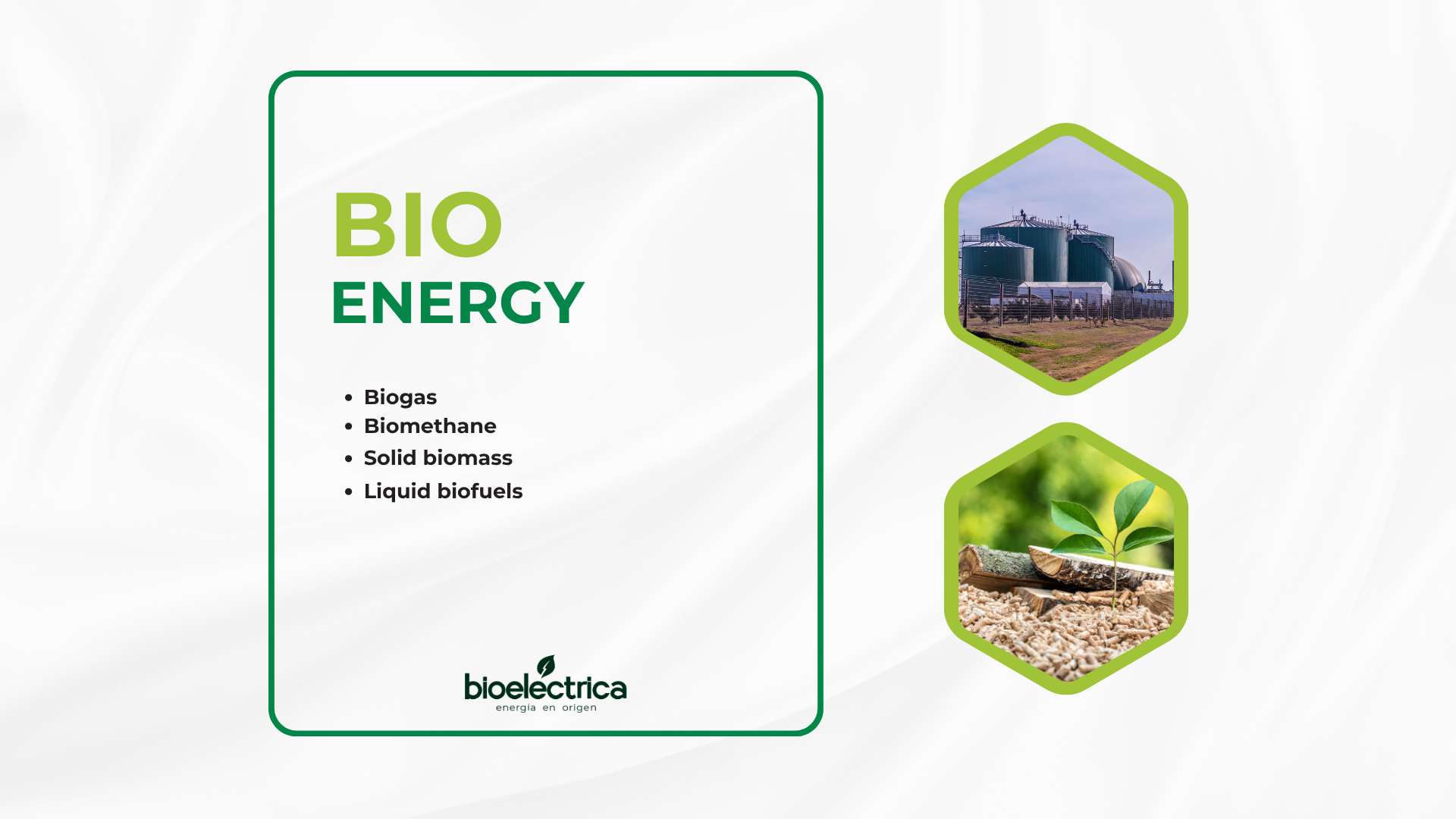
Types of bioenergy
Bioenergy can be generated in different forms depending on the process and feedstock:
Biogas
Produced through anaerobic digestion of organic waste. It can generate electricity, heat, or be upgraded into fuel.
Biomethane
A purified form of biogas with properties similar to natural gas, suitable for injection into gas grids or use as transport fuel.
Solid biomass
Includes materials like wood chips, pellets, and forestry residues used for heat and power generation.
Liquid biofuels
Such as bioethanol and biodiesel, commonly used to partially replace gasoline and diesel.
These alternatives reduce reliance on fossil fuels while maximizing the use of locally available resources.
How does bioenergy work?
Bioenergy is produced by converting biomass—organic matter that stores carbon absorbed through photosynthesis—into usable energy.
Because the carbon released during energy production was previously absorbed by plants, bioenergy can be considered a near carbon-neutral energy source when sustainably managed.
Key processes include:
Anaerobic digestion
Organic waste decomposes without oxygen, producing biogas (methane and CO₂), which can be used for electricity, heat, or fuel.
Combustion and thermal conversion
Solid biomass is burned to generate heat or steam, which powers turbines to produce electricity.
Energy for hard-to-electrify sectors
Bioenergy provides reliable, on-demand energy for industries where electrification is difficult, such as heavy industry, high-temperature processes, shipping, and aviation.
Waste-based feedstock
By 2030, around 60% of bioenergy supply is expected to come from waste and byproducts—reducing the need for dedicated energy crops and improving sustainability.
Modern bioenergy facilities are designed to maximize efficiency while minimizing environmental and social impacts.
Benefits of bioenergy
Bioenergy offers multiple environmental, economic, and social benefits:
- Lower emissions: replaces fossil fuels and supports climate goals
- Waste management: converts organic waste into energy
- Local economic development: creates jobs and value in rural areas
- Energy security: enables decentralized, local energy production
Bioenergy in Argentina: growth potential
Argentina has strong potential for bioenergy development due to its agro-industrial base.
Programs like RenovAr have enabled the growth of biogas and biomass projects, especially in agricultural regions.
Today, bioenergy represents approximately 8% of the country’s installed renewable capacity, with significant room for expansion.
Bioeléctrica’s role in the bioenergy ecosystem
At Bioeléctrica, we transform agricultural waste into renewable electricity through biogas.
Our projects are part of a decentralized energy model, where regions generate energy from their own resources.
Through advanced biodigestion technology and automated systems, we ensure efficient and sustainable operations.
By doing so, we contribute to the circular economy—turning waste into energy, reducing environmental impact, and generating local development.
Be part of the energy transition
Bioenergy is not just an alternative—it is a key solution for building a more sustainable and resilient energy system.
At Bioeléctrica, we help transform organic waste into renewable energy.
👉 Contact us to learn more about our projects and how your organization can be part of the transition.